Painting brick and stucco in New Orleans comes down to breathability. Masonry absorbs and releases moisture constantly, so the coating has to let water vapor escape or the paint blisters and the wall stays wet. Fresh stucco needs to cure before it takes paint, existing masonry needs cleaning and crack repair first, and the finish should be a vapor-permeable masonry product rather than standard house paint.
Masonry walls behave nothing like wood or fiber cement, and that difference decides whether a paint job lasts a decade or fails in two seasons. Brick and stucco take on water, hold it, and give it back to the air, which is exactly what a sealed coating stops them from doing.
That single mechanism explains most masonry paint failures we see across the region. At Big Easy Painters, we work on brick and stucco exteriors throughout New Orleans and the North Shore, where rainfall and humidity keep those walls wetter than they would be almost anywhere else.
Getting the job right means understanding the wall first and the product second. Contact us today to have your masonry exterior assessed before any coating decision gets made.
What Makes Brick and Stucco Different From Painted Siding?
Brick and stucco are porous by design. Water moves into the surface during rain and moves back out as vapor once the weather clears, and the wall stays sound as long as that cycle keeps running.
Wood siding sheds water at the surface, so a film-forming paint sits on top and does its job. Masonry works the other way around, absorbing moisture into the material itself, which means a coating that seals the face traps water inside the wall.
There is also no going back. Once brick is painted, stripping it later is slow, expensive work that risks damaging the face of the brick, so the decision deserves more thought than a siding repaint would.
How Does Moisture Move Through a Brick or Stucco Wall?
Moisture moves through masonry three ways, and those mechanisms drive nearly every coating failure in this climate. Understanding that path is what separates a lasting job from a callback.
Vapor Permeability
Every coating has a rate at which water vapor passes through it. Breathable masonry products allow that vapor to escape, while heavy sealers and standard exterior house paints slow it to a crawl.
When vapor cannot leave, it collects behind the coating. Pressure builds, and the paint lifts off the surface in blisters or sheets rather than wearing down evenly.
That failure pattern is the clearest sign a wall was coated with the wrong product. The paint looks fine for a while, then peels in patches with no obvious cause.
Rising Damp and Ground Contact
Masonry that meets the ground pulls moisture upward through capillary action. Foundations, piers, and the lower courses of a brick wall stay damper than anything above them.
New Orleans makes this worse than most places. High water tables and heavy rainfall keep soil moisture up, so the bottom two or three feet of a masonry wall carry a load the rest of the wall does not.
Coatings fail there first for that reason. Any assessment should start at the base of the wall, not at eye level.
Wind-Driven Rain and Salt
Gulf storms push rain sideways into walls rather than down them. Water enters through hairline cracks, unsealed joints, and around window openings, then works its way through the assembly.
That moving water also dissolves salts already sitting in the brick, mortar, and cement. As it evaporates at the face of the wall, it leaves those salts behind as the white chalky bloom called efflorescence.
Efflorescence is a symptom, not a cosmetic problem. Painting over it without solving the moisture source usually means the same deposits push the new coating off later.
What Preparation Do Brick and Stucco Exteriors Need First?
Brick and stucco have to be clean, sound, dry, and chemically ready before any coating goes on. Prep on masonry runs longer than prep on siding, and skipping it is the most common reason a job fails early.
The sequence looks like this:
Clean the surface: remove dirt, chalking, mildew, and loose material
Remove efflorescence: brush off salt deposits dry, then fix the moisture source behind them
Repair cracks and joints: patch stucco cracks and repoint failed mortar first
Let the wall dry fully: masonry holds water long after the surface looks dry
Check the cure on new work: most manufacturers want at least 28 days before fresh stucco takes paint
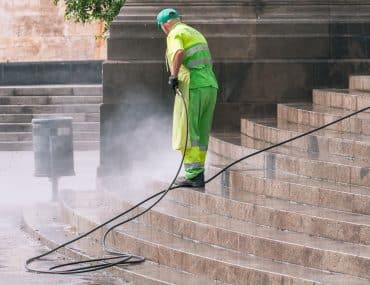
Cleaning method matters as much as cleaning itself. Our pressure washing service uses controlled pressure on masonry, because a high-pressure wand drives water deep into brick and stucco and opens joints that were sound before.
New stucco also brings a chemistry problem. Fresh masonry is strongly alkaline, and standard finishes generally call for the surface to fall to a pH of roughly 10 or below, while alkali-resistant masonry primers and coatings are rated to handle far higher readings.
How Do You Choose a Breathable Masonry Paint or Coating?
The right breathable masonry paint depends on the substrate, its condition, and how much movement the wall sees. Product selection is where most homeowners get steered wrong.
Acrylic Masonry Paint
One hundred percent acrylic latex is the most widely recommended finish for stucco and masonry. It balances durability, flexibility, and vapor permeability better than most alternatives on the market.
Acrylic also handles the temperature swings a New Orleans wall goes through in a single day. The film flexes rather than cracking as the substrate expands and contracts.
For most homes this is the default choice. Acrylic becomes the wrong choice mainly when the wall has structural cracking that a thin film cannot bridge.
Elastomeric Coatings for Stucco
Elastomeric products are thick, flexible films built to bridge hairline cracks in stucco. They stretch with the wall and seal small openings that would otherwise let wind-driven rain through.
The tradeoff is permeability. A heavy elastomeric build on a wall that is already holding moisture can slow drying enough to cause the exact blistering it was meant to prevent.
Elastomeric coatings earn their place on cracked stucco with a dry, well-drained wall behind them. On a damp wall, they are a risk rather than a fix.
Mineral and Silicate Finishes
Mineral coatings bond chemically with the masonry rather than forming a film over it. The result is a highly breathable finish that becomes part of the surface instead of a layer on top of it.
These products suit historic brick and lime-based stucco especially well. They allow the wall to keep moving moisture the way it was originally built to.
Silicate finishes also demand a compatible substrate and careful application. This is specification work, not a shelf decision.
Alkali-Resistant Primers and Block Fillers
Primer is not optional on masonry. An alkali-resistant masonry primer neutralizes the surface chemistry and gives the finish coat a consistent base to bond with.
Block fillers do a related job on porous or open-textured surfaces. They fill voids so the finish coat covers evenly instead of sinking into the substrate.
Our exterior home painting team sprays and back-rolls masonry finishes, which forces the coating into the texture and closes the small voids that let moisture and alkali migrate to the surface.
Where New Orleans Homeowners Should Start
Start with the wall, not the product. A moisture assessment, a look at the base of the wall, and an honest read on cracking will tell you more about the right coating than any product label will.
At Big Easy Painters, we scope masonry exteriors around drainage, substrate condition, and breathability before we recommend a finish. Call us today to book an on-site assessment of your brick or stucco walls.
Frequently Asked Questions
Should you paint brick or leave it natural?
Leaving brick natural is the lower-risk choice for most homes, because unpainted brick needs almost no maintenance and painting it is effectively permanent. Painting makes sense when the brick is already coated, badly mismatched from repairs, or damaged in a way that a breathable masonry finish can improve.
How long does new stucco need to cure before painting?
Most manufacturers recommend at least 28 days of curing before fresh stucco is painted, and humid conditions can extend that. The reason is chemical rather than cosmetic, since fresh stucco is highly alkaline and the pH has to drop before a standard finish will bond and hold.
What kind of paint is best for stucco?
One hundred percent acrylic latex masonry paint is the most widely recommended finish, because it balances durability, flexibility, and breathability. Elastomeric coatings are the alternative on stucco with hairline cracking, though they build a thicker, less permeable film that suits dry, well-drained walls better.
Does elastomeric paint trap moisture?
Elastomeric coatings do not trap moisture outright, but they slow how fast water vapor leaves the wall because they build a much thicker film than standard masonry paint. On a dry, well-drained wall that is usually fine, but on a wall already holding moisture the reduced permeability can cause blistering and peeling over time.
Can you remove paint from brick?
Paint can be removed from brick using chemical strippers and poultice systems, but it is slow, costly work and it carries a real risk of damaging the brick face. Abrasive blasting in particular can strip the hard outer skin and leave the brick more absorbent than before.
What is limewash and how is it different from paint?
Limewash is a mineral finish that soaks into masonry and bonds with it, rather than forming a film on the surface. It stays highly breathable and weathers gradually instead of peeling, which is why it appears often on historic brick and lime-based stucco.
Why is my stucco paint peeling in patches?
Patchy peeling on masonry usually points to trapped moisture rather than bad paint. Water entering through cracks, rising from ground contact, or left in the wall before coating builds pressure behind the film, and the coating releases wherever that pressure is highest.
What causes the white powder on my brick wall?
That white bloom is efflorescence, a salt deposit left behind when moisture travels through masonry and evaporates at the surface. It signals an active moisture path, so brushing it off and painting over it without addressing the source usually brings it straight back.
Pressure washing removes the mold, mildew, pollen, and grime that build up on New Orleans exteriors during long humid stretches, and paint applied over that residue rarely lasts. A clean, dry surfa...
Most New Orleans homes need exterior repainting every 4 to 8 years, though the exact timing depends on siding material, sun exposure, and how well the last paint job was prepped. Wood trim wears fa...
To achieve a flawless paint job, it's essential to spend some time prepping your walls. This includes cleaning, repairing any damage, and applying a primer. Taking these steps will not only ensure ...
The world of interior design is constantly evolving, and each year brings new trends and styles. As we approach 2023, it's time to start thinking about the hottest interior paint colors that wi...


 By Admin
  Aug 24, 2026