

BEP 04 · Levee Gold
Interior and exterior work in the town and out under the pines, old wood included. Every job starts with a free written estimate at the property.
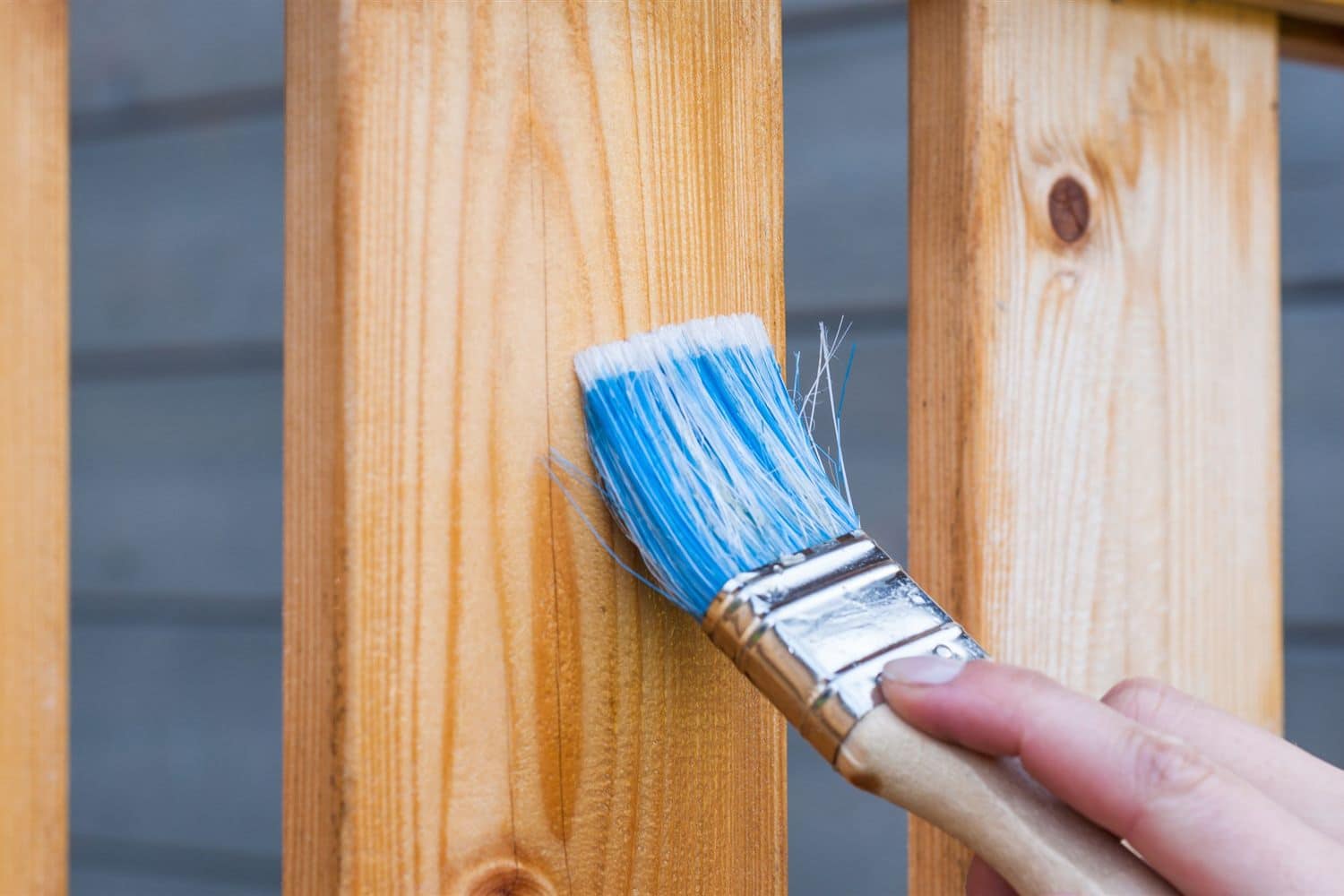 Abita Springs · St. Tammany Parish
What you get
Every house painting job in Abita Springs gets the same four things, in a town of 2,631 people where word travels and the work has to stand up to being seen.
We walk the property, then put scope, preparation, product and price in one document.
Washing, scraping, filling and priming are line items, not favors done if there is time.
Covered in Louisiana, on homes and on commercial property, and we will show you the paper.
Beds and floors covered, paths swept, and the drop sheets leave with us.
Why people call
Six reasons owners call in a former resort town, and most of them are about old wood standing under heavy pine.
The town was built out as a resort, and when that trade ended, many of the summer homes and hotels stood empty. The wood that survived is what we work on now.
The Long Branch, the first major resort hotel, went up in 1880 and still stands on the National Register. Woodwork that old is prepared by hand, not sprayed over.
The town lists its longleaf pines among the reasons people live here, and the preserve nearby protects longleaf savanna. A wall under that canopy dries slowly.
Historic zoned property needs Historic Commission approval before a building permit is even applied for, so the paperwork sets the start date.
In a town of cottages and porches, the outdoor wood is the surface that tells you the rest of the house is due.
The closest long-term stations record roughly 60 to 63 inches a year, which is what an exterior coat in this part of Louisiana has to survive.
What we paint
Six residential services and five for commercial painting, available anywhere in Abita Springs, historic zoned property included.
Walls, ceilings, trim and doors, painted room by room.
Siding, trim and porches, washed and primed before the finish.
Doors off, degreased and primed, then refitted where they came from.
The painting side of a remodel, sequenced around the other trades.
Siding, driveways and patios, at a pressure the surface can take.
Commercial work runs on the same footprint, phased around your opening hours.
Color and finish chosen around your brand, applied after hours so desks stay in use.
Hard-wearing coatings for high-traffic walls, floors and locker areas.
Low-odor systems and calm palettes for clinical and patient-facing spaces.
Scheduled into term breaks so classrooms come back ready to use.
Facades, walkways and parking lots washed down before any coating goes on.
On the job
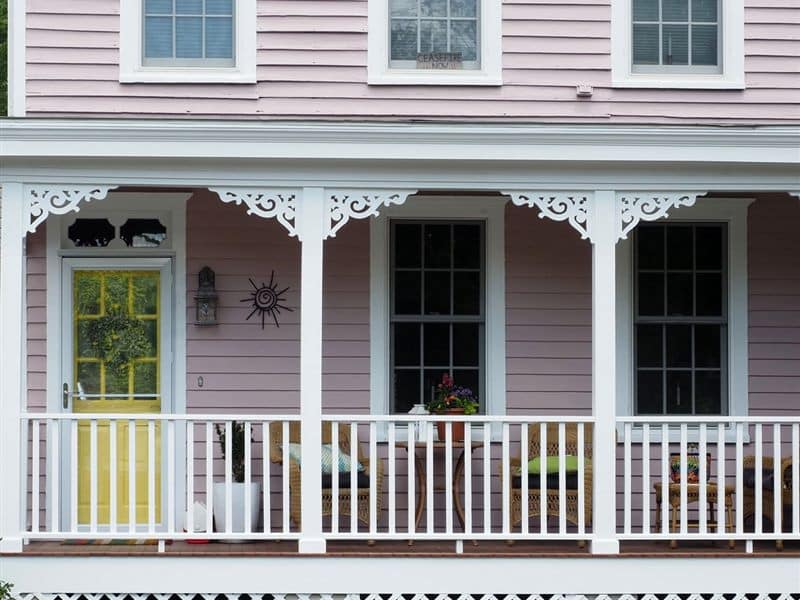
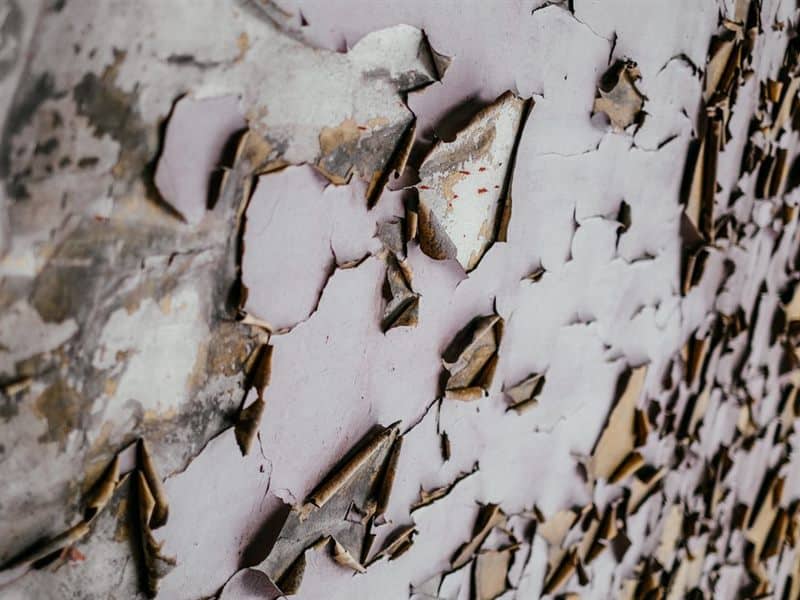
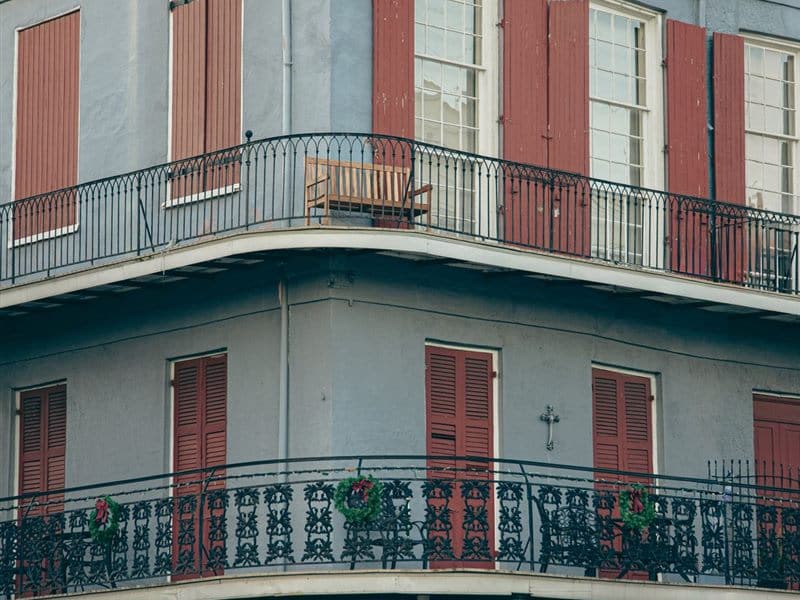
Cottage porches, old layers coming back to a sound edge, and trim cut in by hand.
On the ground
Three things about this town that change the timetable, not just the price.
On historic zoned property, a certificate of appropriateness is required for any change, and it comes before the building permit. We ask which zone you are in at the walk-through.
Needles, sap and pollen fall on fresh work under a closed canopy, so the sequence and the masking matter more here than in an open street.
Homes built before 1978 may contain lead paint, and the EPA Renovation, Repair and Painting Rule sets how those surfaces are disturbed.
When to book
Four signs a north shore cottage is ready for work.
Under pine cover, the shaded wall goes first, and it needs washing rather than painting over.
If a thumb sinks into the bottom of a sill, the repair comes before any primer.
Bare gray wood has lost its coating, and sanding it back is what makes the next coat hold.
Sheet failure means the layers underneath have let go, and we cut them back to a sound edge first.
Local
Four reasons a small-town job runs better with a contractor from the parishes.
Crews working these parishes year round know what humidity and wind-driven rain do to a coat.
The people who walk the property are the people on the ladder, not a call center.
We are close enough that snagging something after the job is a short drive, not a claim.
504-380-9862 reaches the people doing the work, 9:00 am to 6:00 pm.
How it runs
Four steps, and on historic zoned property the commission sits between the estimate and the first coat.
Call or send the form. We agree a time and confirm it before we come.
We look at the actual surfaces, inside or out, and note what needs repair.
Scope, preparation, product and price, in writing. No verbal numbers.
Washing, repairs and priming first, then the finish coats.
Planning
Three things to settle before we start in Abita Springs.
Approval comes before the permit on historic zoned property, so the application goes in as soon as the scope is settled rather than at the end.
Overhanging limbs keep a wall damp and drop debris on wet paint, so access and masking are settled before the wash.
Porch floors, rails and ceilings weather at different rates and are worth quoting separately from the walls.
About the area
What Abita Springs is, in the words of the town and the Census.
Abita Springs sits in St. Tammany Parish, Louisiana, on the Abita River. The U.S. Geological Survey runs a stream gage there called "ABITA R @ ABITA SPRINGS, LA" in the Liberty Bayou-Tchefuncta hydrologic unit.
The 2020 Decennial Census counted a total population of 2,631 for Abita Springs town, Louisiana, across a land area of 4.6 square miles. The 2024 American Community Survey five year estimates record 1,051 total housing units and 1,017 households.
The town describes its present appeal as a quieter life, fresh water and the beauty of the Longleaf pine trees. Artists, sculptors, jewelers, painters, writers and poets have taken the old houses of Abita Springs as their homes.
Around town
Four places in and around Abita Springs, from the trailhead to the preserve.
Located on the Abita River at 22049 Main Street, the Trailhead and Park holds several sheltered picnic tables, a historic pavilion, a splash pad, the Town Museum and a children's playground. Park hours are dusk till dark.
The Abita Springs Trailhead Museum is a folk art museum at 22044 Main Street, on the Tammany Trace. Its stated mission is to celebrate, display and support the history and culture of Abita Springs.
Also known as the UCM Museum, this roadside attraction at 22275 Highway 36 is a folk art environment with thousands of found objects and home made inventions. It includes a miniature Southern town with push buttons that activate animated displays.
This preserve at Abita Springs protects pine dominated wetland communities, including longleaf pine savanna, longleaf flatwoods, bayhead and slash pine with pond cypress woodland. An interpretive boardwalk runs through portions of it and the site is open seven days a week during daylight hours.
Next door
The towns and preserves closest to Abita Springs, under the same pines.
From the Covington Trailhead at 419 N. New Hampshire Street, the Tammany Trace is a 3.55 mile ride over the Bogue Falaya River into downtown Abita Springs. Covington is the western end of the trail.
Mandeville sits on Lake Pontchartrain's north shore, in western St. Tammany Parish. It became a favorite resort for New Orleanians, who would cross the lake by ferry.
Lacombe lies further along the Tammany Trace, past Mandeville and before Slidell, with its trailhead at 28452 Baleighi Road near the Bayou Lacombe drawbridge. From Lacombe to the Slidell trailhead is a 7.17 mile trek.
We drive New Orleans and nine parish cities for a free walk-through. Tell us the address and we will say plainly whether yours is inside it.
Worth knowing
Four things about Abita Springs that go back to the water and the pines.
The pavilion at Abita Springs Park was designed by Tomas K. Sully for the New Orleans Cotton Centennial Exposition of 1884, then disassembled, brought to Abita Springs and reconstructed over the then famous flowing spring. It has been restored and listed on the National Register of Historic Places.
In 1887 a Covington physician conducted extensive tests on the water of Abita Springs, and the tests revealed minerals with good medicinal qualities. He recommended that the Abita area could be very valuable as a resort for boarders and invalids.
Advocates for St. Tammany dubbed their parish "the Ozone Belt" and made health tourism a big part of the parish economy well into the twentieth century. Doctors of the day held that the pine forests released medicinal balsam and that ozone in the air destroyed harmful microscopic organisms.
The town holds a yearly Push Mow Parade, which the town calls one of its popular and well attended events. Past themes include "Oughta Be A Law" in 2011 and "What Were You Thinking?" in 2010.
Getting around
What reaches a town of this size, including the trail and the park and ride.
The Tammany Trace is a hike and bike trail on the former Illinois Central Railroad corridor, which St. Tammany Parish government bought on December 20, 1992 and has since asphalted for 31 miles. It runs from downtown Covington, through Abita Springs, Mandeville and Lacombe, and ends in Slidell, passing straight through the center of Abita Springs.
St. Tammany Parish lists an Abita Springs Park and Ride at 22516 Highway 36, one of nine operational park and ride lots in the parish. The lots were developed for commuters and vanpoolers and also act as transfer points for transportation providers.
St. Tammany Area Transportation is a demand response transit system that operates within the boundaries of St. Tammany Parish and is open to all residents of the parish. It provides curb to curb rides to essential services on a call in, first come first served basis rather than on fixed bus routes.
Driving directions to the Abita Creek Flatwoods Preserve describe LA Highway 59 running north from Interstate 12 Exit 65 for about 5 miles to Abita Springs, then LA Highway 435 for about 4.5 miles from the traffic circle in town. Both are state highways rather than transit services.
Service areas
The eight other parish cities on our list, and New Orleans itself.
Inside New Orleans itself we work across the Garden District, Uptown, Carrollton, Mid-City, Lakeview, Gentilly, Bywater, Marigny, Treme, the Irish Channel and Algiers, on everything from Creole cottages and shotgun doubles to new-build and commercial property.
Questions
What Abita Springs owners ask first.
Yes, anywhere in the town, inside and out. Interior rooms, exterior wood, porches and cabinets are all part of the work.
If the property is zoned Historic, the town requires a certificate of appropriateness for any changes to the property, and the examples it gives are new construction, remodels, additions and fences rather than paint. Historic Commission approval also comes before a building permit is applied for, and the commission sits once a month, so we settle your zoning and your scope at the walk-through.
Yes. Wood of that age needs scraping, filling and priming by hand, and that preparation decides how long the finish lasts.
The shaded side of the house takes the damage first. Under longleaf pine, the side that never gets direct sun stays damp and grows mildew, which has to be washed off before anything is applied.
Yes. Both are cities we cover, and both start with the same free written estimate.
Yes. We walk the property, look at the actual surfaces, and put scope, preparation, product and price in writing, with no obligation to book.
Yes, in Louisiana, and the cover applies to commercial jobs as well as homes. Ask us for proof before you sign anything.
9:00 am to 6:00 pm. Calling on 504-380-9862 is the quickest way to get a walk-through booked, and the form reaches us outside those hours.
Free estimate
Send the form and we will call to arrange a walk-through. If you would rather talk it through now, the phone is quicker.
We call to agree a time that suits you, and confirm it before the visit.
We walk the property, look at the actual surfaces and talk through color.
You get scope, preparation, product and price in writing, with no obligation.
Serving New Orleans, Metairie, Kenner, Covington, Mandeville, Madisonville, Abita Springs, Hammond, LaPlace and St Rose.
Request Your Free Estimate
Loading the estimate form. If it does not appear, call 504-380-9862.


